Animal fats and oils are slaughter derived from pigs (lard), chickens & ducks (poultry fat), cattle, goats & sheep (tallow), fish (fish oil), and other creatures. Dairy products such as butter and ghee are also animal fats used for cooking.
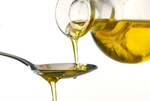
Cooking oil is obtained from different sources ranging from coconut, safflower/kardai, sesame/til, groundnut, mustard, etc. As long as the plants are not genetically engineered (like rapeseed from which canola oil is produced) the oils extracted, if consumed in moderation, are basically not harmful.
During Vedic times sesame seed was called tila and sesame oil was taila. Thus til was the origin of the word tel, the word used for oil. Pesharna (grinding), yantra (machine) and chakra (wheel) were added later as suffixes to tel.
Kachi ghani or cold pressed oil is how oil was first extracted and still is, for example from mustard seeds. No impurities were removed, it was not heated and no preservatives were added. It was pure oil with nutrients intact.
Refined oil came about with industrial extraction and marketing of oil. They began subjecting the oil to different procedures and added chemicals to increase shelf life, remove typical odors and change colour. Naturally then, refined oil is not a healthy choice.
For example, people think olive oil is the ultimate oil. Little do they realize that there are various types of olive oil, the main categories are: extra virgin (first press of olives, 100% natural, high in antioxidants), pure (refined oil with a small addition of virgin olive oil), light (refined oil with higher smoke point), pomace (oil extracted from left-over pulp with the help of solvents and considered unhealthy).
Refined vegetable oil that has been made solid through hydrogenation results in vanaspati (as in Dalda vanaspati). Although as unhealthy, it is considered a cheap substitute for butter and ghee made from milk, and is therefore also called vanaspati ghee. Beginning 1980s to 1990s Jain Shudh Vanaspati Ltd was caught and prosecuted for importing beef tallow and passing it off as vanaspati.
Castor oil is mostly used as a powerful laxative although it has a number of other medicinal uses like for the treatment of wounds, cleaning dentures, during child-birth, and as skin and hair treatments. However, it is important to remember that it can cause allergic reactions.
Fatty Acids
Components of all oils and fats are fatty acids. Oils are labeled depending on the type of fatty acid prominent in it.
Saturated fatty acids (SFA) remain solid at room temperature. They are mostly derived from animal sources like ghee and butter. Plant derived saturated fats are palm and coconut oil. In fact, coconut oil is frequently used as a good substitute for ghee and butter.
Mono-unsaturated and poly-unsaturated fatty acids are plant derived. They are called MUFA and PUFA. An American study found that one needs to combine MUFA and PUFA oils for a healthy heart.
Trans-fats are man-made and toxic because they are produced during processing of oils/fats or during repeated heating at high temperature for frying. Trans-fats increase LDL and reduce HDL (the “good” cholesterol) in our blood.
A review of studies on trans-fats published in the New England Journal of Medicine established a strong link between trans-fat consumption and coronary heart disease. Therefore all high-heat refined oils, olive included, should be avoided.
Poly-unsaturated fatty acids (commonly known as PUFAs as stated above) are critical for good health. Linoleic acid or Omega 6, and alpha-linoleic acid or Omega 3, are two PUFAs that are essential fats. They are not produced in our bodies and need to be absorbed from the food we consume, or should be taken as supplements.
The richest source of Omega 6 oil is safflower/kardai oil, followed by grape seed oil; whereas, the richest source of Omega 3 is flax seed. Flax seed oil and linseed oil are extracted from the same plant but only flax seed oil can be consumed as a nutritional supplement; linseed oil is used for wood, paint, etc.
Certain studies conducted in 2017 that analyzed the effects of specific nutrients showed that when 5% of calories from saturated fats were replaced by an equal number of calories from poly-unsaturated fats, mono-unsaturated fats or whole-grain carbohydrates, the risk of coronary heart disease reduced respectively by 25%, 15% and 9%.
|